Now Hiring! Contact us for more information!
Now Hiring! Contact us for more information!
Travertine can last for decades, but everyday use, spills, impact, moisture, improper maintenance, and normal wear can eventually leave the surface looking damaged or neglected.
You may notice holes where travertine filler has fallen out, cracked or missing grout, scratches, worn areas, etching, stains, or a finish that has become dull and uneven. In many situations, these problems do not automatically mean the travertine needs to be replaced.
Professional travertine repair can address individual areas of damage while restoring the surrounding surface so the completed result looks cohesive rather than patched together.
Beyond Stone Solutions provides travertine repair and restoration throughout Phoenix and the surrounding Arizona area. We evaluate the condition of the stone first and determine which combination of repair, honing, polishing, cleaning, sealing, or other restoration work is appropriate for the surface.
For 50 years, Beyond Stone Solutions has helped Arizona homeowners and businesses repair, restore, protect, and maintain natural stone surfaces. Our experienced team understands that damaged travertine may require more than cleaning or refinishing—from repairing holes and cracks to correcting worn surfaces, damaged grout, etching, and other signs of deterioration.
Travertine damage can take many forms, and the appropriate repair depends on what caused the problem and how deeply the surface has been affected.
Beyond Stone Solutions can evaluate travertine surfaces with issues such as:
A professional evaluation is important because the visible problem does not always tell the entire story. A hole may need to be filled and color-matched. A worn area may require honing and polishing after repair. Etching may require surface refinement rather than conventional cleaning.
The goal is to address the underlying surface condition instead of simply covering up the visible damage.
Travertine is naturally porous and often contains filled voids as part of its original appearance. Over time, some of those fillers can loosen or fall out, leaving holes that collect dirt and become increasingly noticeable.
Repairing those areas properly involves more than filling them with an off-the-shelf material.
Depending on the stone and the damage, a professional repair may involve:
The exact process varies from one travertine surface to another. A successful repair should address the damaged area while taking the surrounding stone and existing finish into consideration.
Travertine floor damage rarely fits into a single category.
A floor may have holes and cracks in some locations, worn grout in others, and dullness or etching across the broader surface. Treating only one visible problem can leave the floor looking inconsistent.
That is why professional travertine restoration often combines several treatments.
For example, a Phoenix travertine kitchen floor documented in the Beyond Stone Solutions portfolio had dullness, acid etching, dark and dirty grout lines, holes, and cracks. The team performed minor repairs using hand tools and tinted epoxy filler before honing away the etching and dullness, polishing the surface to restore reflection and luster, and applying an impregnating sealer to help inhibit staining.
The result was not simply a repaired hole or cleaned floor. The entire surface was brought back into a more cohesive, finished condition.
Beyond Stone Solutions has completed travertine repair and restoration projects in the Phoenix area. These documented projects show how different types of damage can require different combinations of repair and surface restoration.
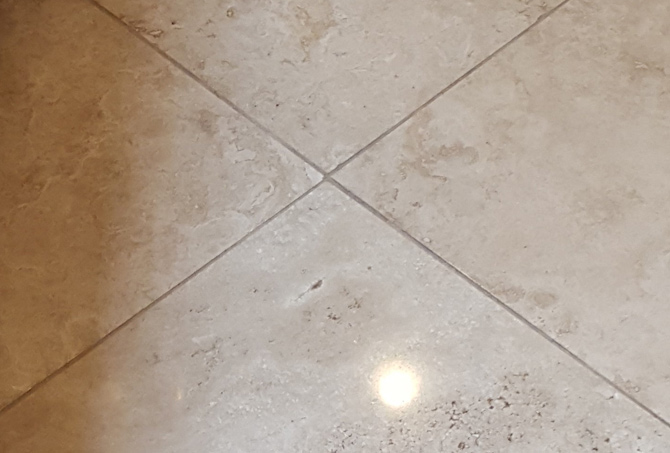
A Phoenix travertine kitchen floor had multiple issues, including dullness, acid etching, dark grout, holes, and cracks. The damaged areas were repaired with tinted epoxy filler before the floor was honed, polished, and sealed.
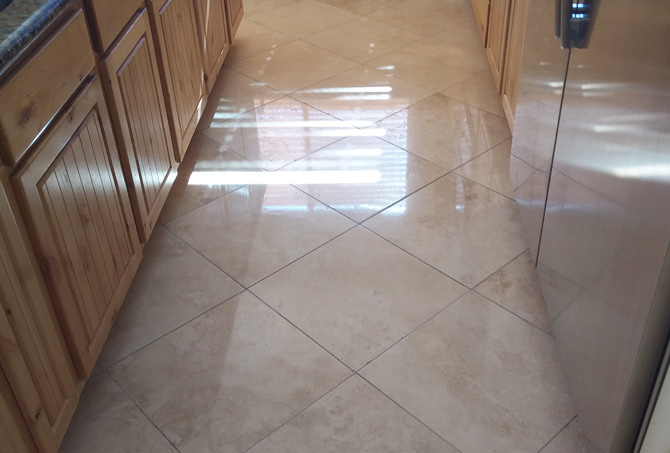
This documented Phoenix travertine project demonstrates another important aspect of restoration: repairing damaged or missing areas and then refining the surrounding surface so the finished floor has a more consistent appearance.

Another documented BSS project focuses specifically on travertine floor damage and demonstrates the company's experience addressing damaged natural-stone surfaces rather than simply replacing them.
Replacement is not always the first or best answer when travertine is damaged.
If the underlying stone is structurally suitable for restoration and the damage is primarily surface-related, professional repair and restoration may be able to significantly improve the existing installation.
Repair may be worth considering when:
That does not mean every damaged travertine surface can or should be repaired. Severe structural damage, widespread deterioration, installation problems, or other underlying conditions may require a different solution.
The best way to know is to have the stone evaluated by someone experienced in natural stone repair and restoration.
One reason travertine repair can be misunderstood is that repairing the damaged area is sometimes only one step of the restoration process.
Imagine a travertine floor with several holes, scratches, etching, and a dull finish.
Filling the holes alone may technically repair the holes—but the surrounding surface could still look worn.
In that situation, the restoration may continue with honing to refine the surface, followed by polishing or another finishing process appropriate for the desired appearance.
This approach helps the repaired areas work visually with the rest of the stone.
Beyond Stone Solutions has documented Phoenix travertine work where repair, honing, polishing, and sealing were combined as part of the restoration process.
Grout and travertine fillers play an important role in the appearance of many travertine installations.
When grout becomes dark, damaged, or missing—or when filled holes reopen—the problem can make an otherwise attractive floor look neglected.
Repair work may include addressing deteriorated grout and refilling appropriate voids before the stone surface is refined.
The Phoenix kitchen-floor project in the BSS portfolio is a good example: the floor had dark, dirty grout lines along with holes and cracks. The restoration addressed the damaged areas before the surface was honed, polished, and sealed.
Travertine is used throughout Phoenix properties in many different applications.
Beyond Stone Solutions can evaluate damaged travertine used for:
The appropriate repair method depends on the particular installation, the condition of the stone, and the finish you want to achieve.
Every repair begins with understanding the stone.
We look at the type of damage, the condition of the surrounding travertine, the existing finish, and the intended use of the surface. From there, we can determine whether the project calls for localized repair, honing, polishing, cleaning, sealing, or a combination of treatments.
That matters because a repair that looks acceptable in isolation can still stand out if the surrounding surface has a completely different finish.
Our goal is to make the repair part of the restoration—not simply place a patch on a damaged surface.
With decades of natural-stone experience, Beyond Stone Solutions can help Phoenix property owners understand what is repairable, what restoration can accomplish, and what approach makes the most sense for the existing stone.
Once your travertine has been repaired and restored, proper maintenance can help preserve the result.
We recommend:
A repaired and properly maintained travertine surface can continue to provide years of service.
The best way to determine that is through a professional evaluation. Localized holes, damaged grout, surface wear, scratches, and similar problems may be repairable, while severe structural or widespread deterioration may require a different solution.
If your Phoenix travertine has holes, cracks, damaged grout, scratches, etching, or a worn and uneven finish, don’t assume the entire installation needs to be replaced.
Beyond Stone Solutions can evaluate the existing stone and help determine whether professional repair and restoration can bring it back to a beautiful, usable condition.
Call Today at (602) 830-5861